
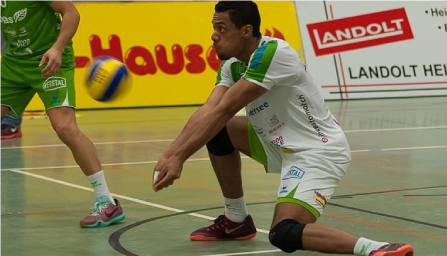
Passing is the foundational skill of volleyball. It’s the very first touch in most rallies and sets the tone for everything that follows. Without a quality pass, the offense can’t run, the setter can’t distribute, and the team is forced to play out of system. That’s why every volleyball player, regardless of position, must master the art of passing.
This breakdown focuses on the technique behind a clean and consistent forearm pass during serve receive — the posture, movement, and mindset that make high-level passing possible.
1. Athletic Base: Ready to React
Before the ball is even served, the passer must be in a low, athletic stance:
- Feet are shoulder-width apart, with one foot slightly staggered forward.
- Knees are bent, hips low, and body weight is on the balls of the feet.
- The arms are relaxed but positioned in front of the body, ready to form the platform.
This position creates balance, stability, and explosive potential in any direction. A strong base prepares the passer to adjust quickly and stay controlled through the movement.
Coaching Tip: Think like a coiled spring — compact, centered, and ready to push off with power.
2. Footwork: Positioning Over Reaching
Great passing starts with the feet, not the arms. The goal is to beat the ball to the spot:
- Use small, quick, controlled steps to adjust to the serve.
- Keep your hips low as you move so you don’t have to reset before passing.
- Arrive early, plant, and then pass — avoid passing while moving.
Many errors happen when passers try to reach or swing their arms instead of adjusting with their feet. The better the footwork, the better the angle and balance at the moment of contact.
Training Focus: Work on short distance shuffle and crossover steps during serve receive drills.
3. Platform Formation: Create a Surface, Not a Swing
The platform is formed by:
- Locking the elbows straight and bringing the forearms together.
- Placing thumbs side by side and pointing them downward.
- Rotating the wrists inward slightly to flatten the forearms into one even surface.
The key is stillness and structure. The platform doesn’t move at contact — it holds firm and lets the ball rebound at the correct angle.
Key Reminder: Avoid swinging or lifting with the arms. The lift should come from the legs and the angle from the shoulders.
4. Contact Point and Control
Ball contact happens just above the wrists and below the elbows. It should occur:
- In front of the body, not off to the side
- With knees bent and the chest leaning slightly forward
- With the eyes focused on the ball all the way into the platform
The ball should rebound smoothly off the forearms with minimal spin and controlled height. The pass should travel in an arc that brings it to the setter’s zone, ideally above the 10-foot line.
Training Insight: Use stationary passing reps to build muscle memory for contact point and control.
5. Angle and Finish: Direct the Ball
Once in position and with a proper platform, the next priority is angle control:
- The shoulders and platform determine the direction of the ball.
- Adjusting the angle of your arms changes the target location.
- A subtle lean or body shift can redirect the pass without swinging the arms.
After contact, the arms should remain extended toward the target. Holding the finish allows for better feedback and teaches control over time.
Visual Cue: Freeze at the end of each rep and check your angle — are your arms pointing where the ball went?
The Mental Side of Passing
Passing isn’t just mechanical. It requires mental sharpness, poise, and confidence:
- Focus on reading the server’s toss, shoulder angle, and rhythm.
- Stay relaxed under pressure and don’t flinch or pull away.
- Trust the training — solid posture and footwork will always win over last-second reactions.
Great passers don’t panic. They trust their preparation, move early, and take ownership of every first contact.
Mindset Note: A missed pass isn’t failure — it’s feedback. Use every rep as a chance to improve.
Summary: Keys to Consistent Passing
To build consistency and confidence in serve receive:
- Start with a stable and athletic ready position
- Move your feet, not your arms
- Create a clean, locked platform
- Contact the ball in front with eyes up
- Direct the ball with body angle and hold the finish
Passing is a skill that can transform a player’s game. It builds control, court awareness, and sets the tone for every rally. At Alabama Cat5 Volleyball Academy, passing isn’t treated like a warm-up — it’s a core skill built through daily reps, constant feedback, and smart progressions.
We believe the first contact should be your strongest weapon — and it all begins with a solid pass.


